Ceilings show cracks more than any other surface in the house. Light from a window runs straight across them and picks out every line. Most ceiling cracks are nothing more than cosmetic, but a few are worth a closer look. Here is how I read them when I come out to quote.
Fine hairline cracks
Thin, random cracks, sometimes in a spider's web pattern, are common in older plaster ceilings and in ceilings that have been painted many times. They are usually down to the plaster drying, minor movement in the house over the years, or changes in temperature and humidity through the seasons. They are rarely a structural worry, but they do make a ceiling look tired.
Filling every hairline crack tends to leave a patchwork that still shows once it is painted. If there are a lot of them, a full skim of the ceiling usually gives a better result.
Straight-line cracks
Long, straight cracks running across the ceiling often follow the joints between plasterboard sheets. They appear when the joints were not taped properly, or when the boards move slightly as the joists flex. They can also turn up where an old ceiling has been boarded over.
The fix is usually to rake out the crack, tape the joint and skim, or skim the whole ceiling so the joints are covered properly.
Cracks around downlights and fittings
Holes cut for downlights, speakers or new cables can leave cracking and damaged edges. This is one of the most common jobs I get for ceilings, making good after an electrician has been in. The damaged area is cut back and repaired, then the ceiling is skimmed so the new and old plaster blend together.
Cracks after a leak
A leak from a bathroom or water tank above can stain a ceiling, soften the plaster or plasterboard and leave cracks once it dries. Once the leak has been fixed and the area has dried out, damaged board can be cut out and replaced as a plasterboard repair, and the ceiling skimmed over.
Cracks to get looked at sooner
Some signs are worth acting on rather than leaving:
- Sagging or bowing. A ceiling that dips or bulges, particularly on older lath and plaster, may have lost its grip on the timber above.
- Cracks that are widening. Mark the ends of a crack with a pencil and the date. If it grows, find out why.
- Cracks with a step. If one side of the crack sits lower than the other, there may be movement or loose plaster.
- Cracks that line up with cracks in the walls. These can point to movement in the building, which may need a structural engineer or surveyor to look at before the plastering is put right.
Loose plaster on a ceiling is the same problem as blown plaster on a wall, but with gravity working against you, so do not leave it.
Textured ceilings
If the cracked ceiling has an old textured coating, such as a swirl or stipple pattern, it needs a different approach. Older textured coatings can contain asbestos, so they should be checked before anyone sands, scrapes or drills them.
Patch or full re-skim?
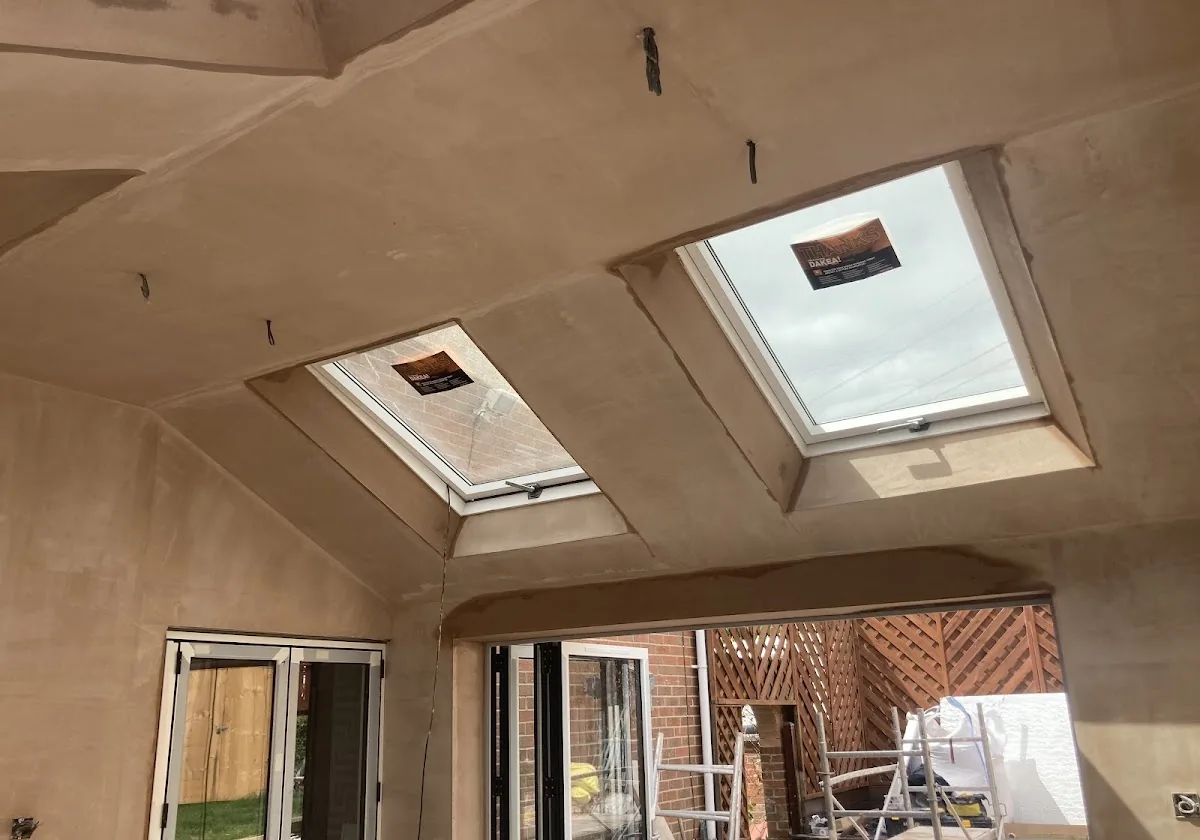
A single crack or one damaged area can be repaired on its own. Where there are lots of cracks, old repairs and uneven areas, a full ceiling re-skim is usually the better value, because it gives you one flat, even surface rather than a series of patches. If the walls need doing as well, it makes sense to skim the walls and ceiling together while the room is cleared.
New ceiling plaster needs time to dry before painting. See how long new plaster takes before you can paint it.
Frequently asked questions
Are ceiling cracks normal in a new extension?
Some fine cracking can appear as a new building dries out and settles. If cracks keep growing, have them looked at.
Can I fill ceiling cracks myself?
Small, stable hairline cracks can be filled with a flexible filler. Anything recurring, sagging or widening is better looked at.
Get your ceiling sorted
I take on ceiling work across Birstall and the surrounding areas, from single repairs to full re-skims. Ask for a free quote or call 07590 357963.